
 Image 1 of 3
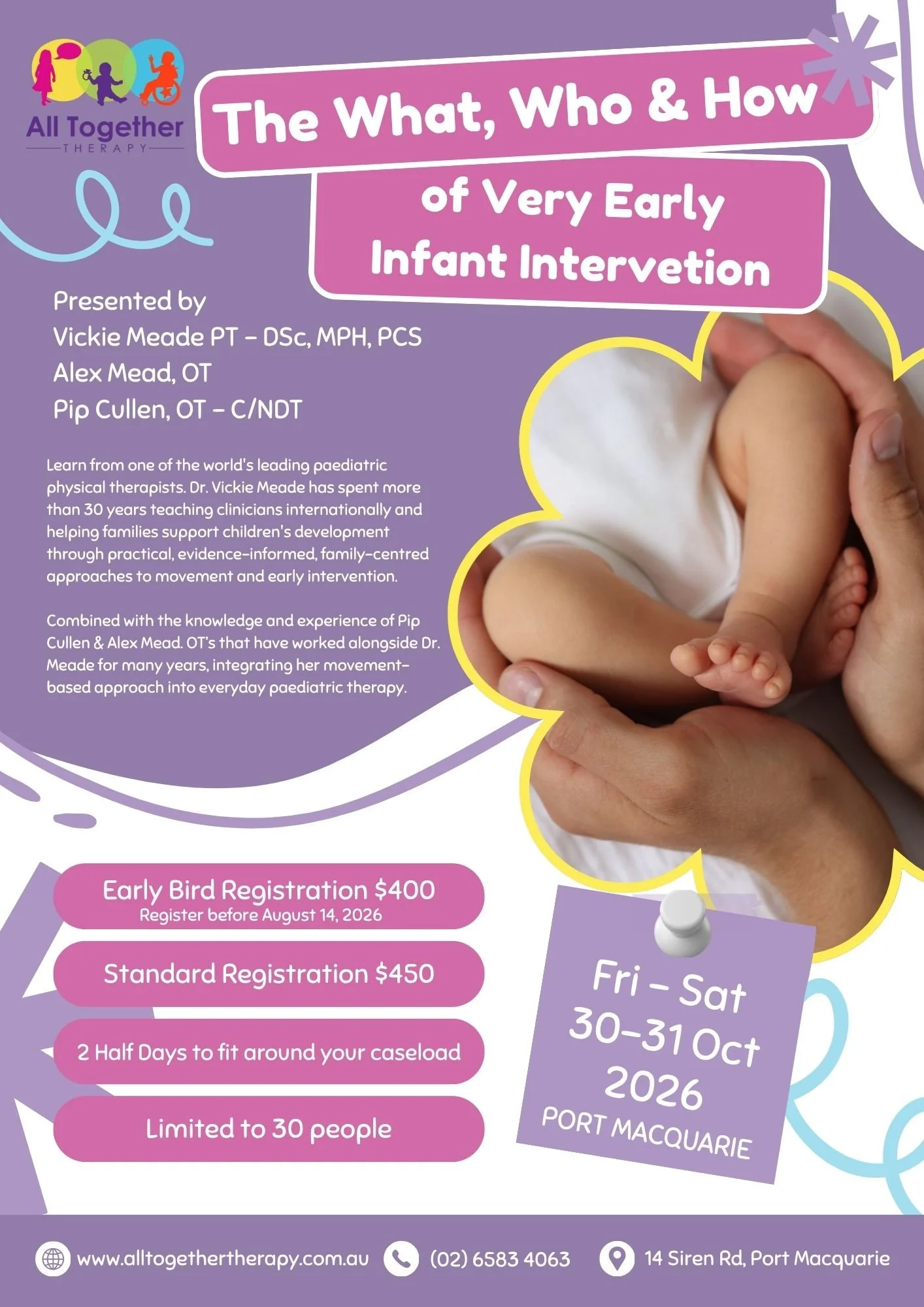 Image 2 of 3
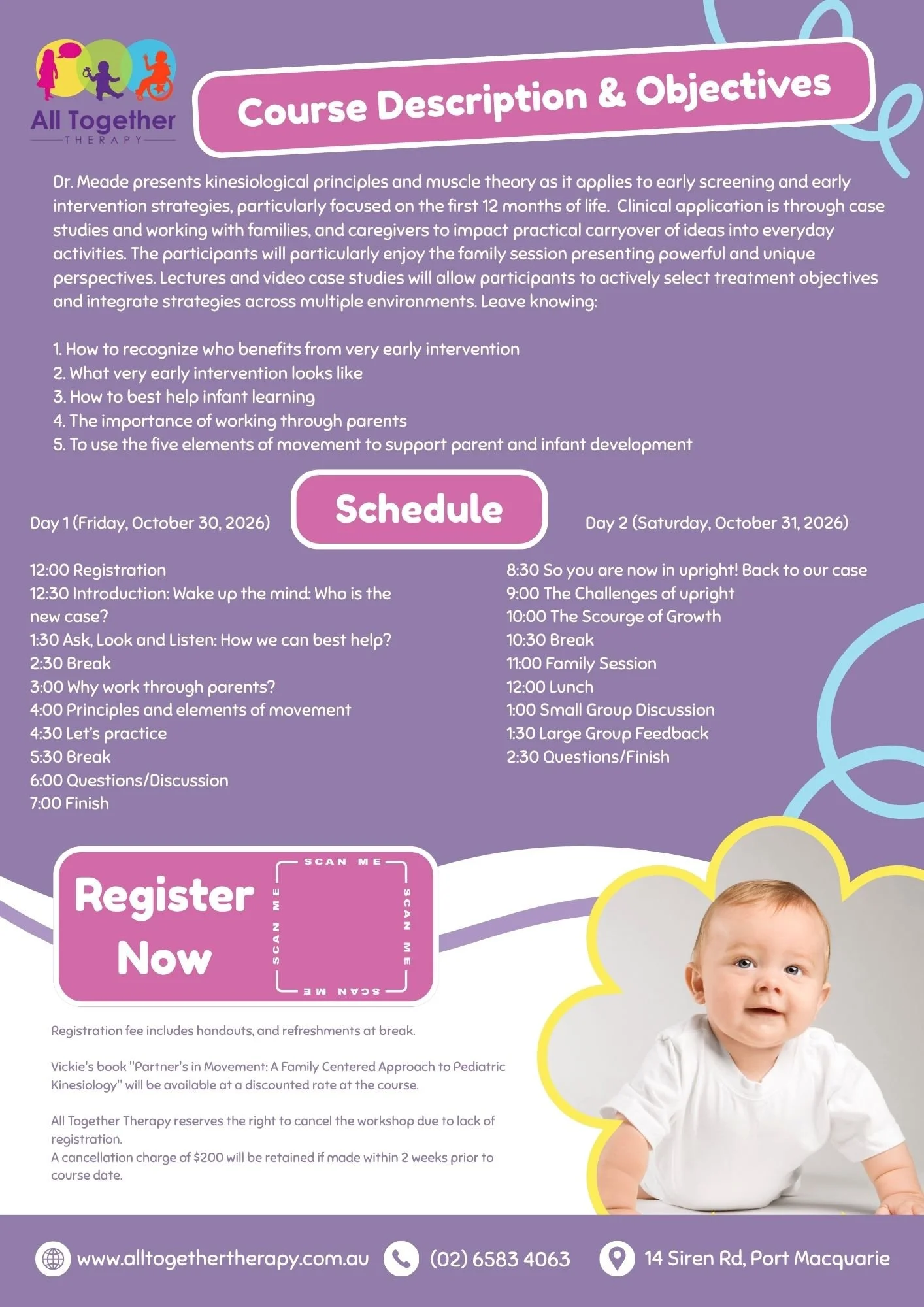 Image 3 of 3
The first year of life presents an extraordinary opportunity to influence a child's development. Early identification and timely intervention can have a profound impact on movement, participation and long-term outcomes, but recognising which infants need support and knowing what to do next can be challenging.
Join internationally recognised paediatric physical therapist Dr. Vickie Meade, alongside experienced occupational therapists Pip Cullen and Alex Mead, for a practical, evidence-informed course designed to build your confidence in screening, assessing and supporting infants during the critical first 12 months of life.
Drawing on more than 30 years of international teaching and clinical expertise, Dr. Meade shares the kinesiological principles and movement concepts that underpin effective early intervention. Together, the presenters translate theory into practical strategies that can be immediately applied across a range of clinical settings.
Through engaging lectures, video case studies, clinical reasoning activities and the powerful perspectives of families with lived experience, you'll learn how to identify infants who may benefit from early intervention, develop meaningful treatment priorities, and partner with parents and caregivers to create learning opportunities within everyday routines.
Whether you work in private practice, community health, early intervention, hospitals or neonatal follow-up services, this course will equip you with practical tools and a deeper understanding of infant development that you can apply from your very next session.
Recognise infants who may benefit from very early intervention.
Understand what effective early intervention looks like during the first year of life.
Apply movement-based, evidence-informed strategies that support infant learning and development.
Partner confidently with parents and caregivers to embed intervention into everyday routines.
Use the Five Elements of Movement to guide assessment, clinical reasoning and intervention planning.
Translate theory into practical strategies through real-world case studies and clinical application.
The first year of life presents an extraordinary opportunity to influence a child's development. Early identification and timely intervention can have a profound impact on movement, participation and long-term outcomes, but recognising which infants need support and knowing what to do next can be challenging.
Join internationally recognised paediatric physical therapist Dr. Vickie Meade, alongside experienced occupational therapists Pip Cullen and Alex Mead, for a practical, evidence-informed course designed to build your confidence in screening, assessing and supporting infants during the critical first 12 months of life.
Drawing on more than 30 years of international teaching and clinical expertise, Dr. Meade shares the kinesiological principles and movement concepts that underpin effective early intervention. Together, the presenters translate theory into practical strategies that can be immediately applied across a range of clinical settings.
Through engaging lectures, video case studies, clinical reasoning activities and the powerful perspectives of families with lived experience, you'll learn how to identify infants who may benefit from early intervention, develop meaningful treatment priorities, and partner with parents and caregivers to create learning opportunities within everyday routines.
Whether you work in private practice, community health, early intervention, hospitals or neonatal follow-up services, this course will equip you with practical tools and a deeper understanding of infant development that you can apply from your very next session.
Recognise infants who may benefit from very early intervention.
Understand what effective early intervention looks like during the first year of life.
Apply movement-based, evidence-informed strategies that support infant learning and development.
Partner confidently with parents and caregivers to embed intervention into everyday routines.
Use the Five Elements of Movement to guide assessment, clinical reasoning and intervention planning.
Translate theory into practical strategies through real-world case studies and clinical application.